



Last Updated: November 7, 2026
Quick Summary
To decide whether to repair or replace a refrigerator compressor, compare the all-in repair quote against the installed price of a comparable new fridge and weigh the unit's age and repair history. A compressor job runs $400 to $1,200 all-in, so repair makes sense when the fridge has meaningful life left and the quote is well below replacement cost.
- A start relay fails far more often than the compressor itself, so test it first.
- Compressor replacement labor runs $300 to $400, with parts costing $100 to $800.
- A transparent quote itemizes refrigerant recovery, a new filter drier, and post-repair testing.
- Check the sealed-system warranty before authorizing work; it may cover the compressor part only.
- A second sealed-system repair is a warning sign that replacement usually wins.
Table of Contents
- Signs of a Bad Refrigerator Compressor
- How to Tell Compressor Failure From Cheaper Cooling Problems
- How Long Do Refrigerator Compressors Last?
- Refrigerator Compressor Replacement Cost vs. Repair Cost
- Repair or Replace the Compressor: A Decision Framework
- Compressor Warranty and Sealed-System Coverage
- Book a Diagnostic Visit Before You Spend on a Compressor
- Frequently Asked Questions
Signs of a Bad Refrigerator Compressor
A failing refrigerator compressor usually announces itself through sound, heat, or a fridge that simply stops cooling. If you are weighing whether to repair or replace a refrigerator compressor, start by confirming the compressor is actually the problem. The compressor is the pump at the back of the fridge that moves refrigerant through the sealed system.
Watch for these signals:
- Clicking then silence. The compressor tries to start, clicks off, and repeats. That pattern often points to the start relay, not the compressor itself.
- A hot back panel. The compressor should run warm, not scorching. Excessive heat suggests it is straining.
- Loud humming or rattling. A compressor that growls or vibrates harder than usual is working too hard.
- No sound at all. A completely silent compressor with a warm fridge means it is not running.
- Warm refrigerator, cold freezer. This split is a classic sign of a cooling problem in the sealed system.
Not every symptom means a new compressor. If you are unsure whether your fridge needs attention at all, our guide on how to tell if your refrigerator needs repair walks through the everyday warning signs before you call anyone.
How to Tell Compressor Failure From Cheaper Cooling Problems
Before you price a compressor, rule out the cheap fixes. Dirty condenser coils, a failed condenser fan, a blocked evaporator fan, or a door seal that no longer closes can all make a fridge run warm.
A simple test: listen for the fan. If the compressor hums but the fridge stays warm, the fan may have stopped moving air across the coils.
If the freezer works but the fridge does not, the fault is often airflow or a defrost problem rather than the compressor. Our guide on a fridge not cooling but the freezer working covers those simpler faults step by step.
Checking the Start Relay, Overload Protector, and Capacitor
The start components are the cheap parts that sit between the wall outlet and the compressor. A start relay is the switch that gives the compressor a jolt to get moving, and it fails far more often than the compressor itself.
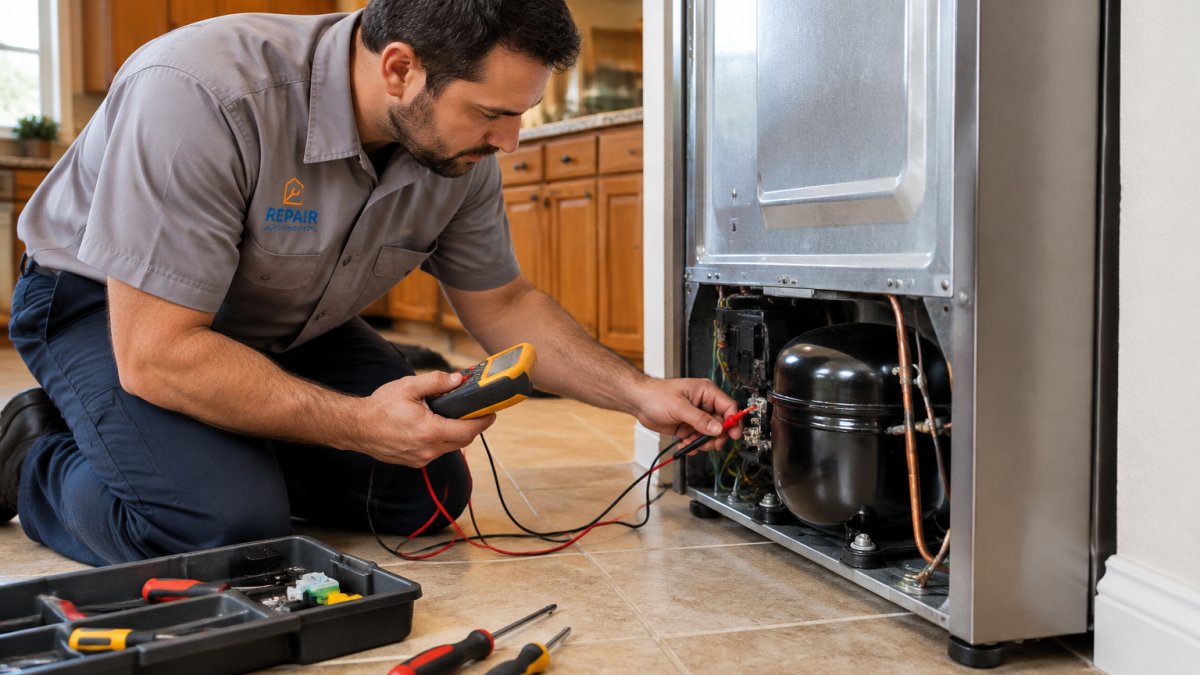
A technician tests each part with a multimeter. If the relay is burned or rattling, replacing it is a small job. If the compressor windings read open or shorted, the compressor itself is gone. That distinction is the whole ballgame: a $30 relay versus a full compressor job.
How Long Do Refrigerator Compressors Last?
Refrigerator compressors can last many years, and many fridges keep running well past their expected service life. Even a long-lived compressor can fail sooner when other common fridge failure causes put extra strain on the appliance.
How long a compressor lasts depends on how hard it works. A fridge packed into a hot garage, coils that are never cleaned, and a door seal that leaks warm air all push the compressor to run longer. Age matters, but so does the repair history.
Refrigerator Compressor Replacement Cost vs. Repair Cost
Here is where the numbers decide the outcome. Published estimates vary widely because shops bundle parts, labor, and refrigerant work differently.
A straight repair, like a start relay or capacitor, is typically much less involved. The table below shows the like-for-like comparison most guides skip.
| Job | Typical Cost Range | What It Covers |
|---|---|---|
| Start relay or capacitor | Low, parts-level | Small electrical part, quick labor |
| Overload protector | Low, parts-level | Safety switch replacement |
| Compressor replacement (labor) | $300-$400 | Technician time to swap the compressor |
| Compressor parts | $100-$800 | Compressor unit by size and type |
| Full compressor repair (all-in) | $400-$1,200 | Parts plus labor, varies by shop |
The honest read: a compressor job can be a significant share of the cost of a new fridge. That is why the decision framework below matters more than any single quote.
What a Compressor Quote Should Actually Itemize
A compressor replacement is sealed-system work, not a simple part swap. A transparent quote separates the line items below so you can compare shops and compare against buying new. Most practitioners find the total lands in the $400 to $1,200 range, but the split matters as much as the total.
- Diagnostic fee. Ask before booking whether a diagnostic visit is charged and whether it is credited toward the repair.
- Compressor part. Cost depends on size, type, and whether it is a variable-speed or standard unit.
- Labor. Ask for the labor charge for the swap itself, which can vary by model and location.
- Refrigerant recovery and recharge. Sealed-system work requires recovering the old refrigerant, evacuating the lines, and charging to spec. This is a separate line item and is not included in a bare parts-and-labor quote.
- Filter drier and minor sealed-system parts. A replacement filter drier is standard practice on a compressor job; some quotes bundle it, some do not.
- Disposal or haul-away. If you replace the fridge instead, haul-away and recycling commonly add a fee, sometimes offset by a retailer promotion.
- Contamination checks and post-repair testing. A proper job includes checking for acid and moisture in the system and verifying pressures and temperatures after recharge.
Watch out: a quote that lists only "compressor" and "labor" with no refrigerant, drier, or testing line is either incomplete or hiding those costs in the labor rate. Ask which items are included before you compare totals.
Compressor Repair vs. a New Refrigerator: The Real Comparison
Comparing a $900 compressor job to a $1,200 new fridge is the wrong math. The fair comparison puts the all-in repair cost against the all-in replacement cost, then weighs remaining service life.
| Cost Category | Repair Compressor | Buy and Install New Refrigerator |
|---|---|---|
| Diagnostic | Flat visit fee, often credited | Usually none |
| Equipment | Compressor part, $100-$800 | New unit, varies widely by size and type |
| Labor | $300-$400 swap plus sealed-system work | Delivery and installation, often included |
| Refrigerant and sealed-system work | Recover, evacuate, recharge, drier | Not applicable |
| Removal and disposal | Old compressor and refrigerant handling | Haul-away fee, sometimes waived |
| Remaining life after job | Depends on age and repair history | Full expected service life |
A repair is most worthwhile when the fridge has meaningful life left and the quote is well below the price of a comparable new unit.
For a broader version of this logic, our appliance repair vs. replacement guide applies the same framework across every major appliance.
Refrigerator compressor replacement cost breakdown
Repair or Replace the Compressor: A Decision Framework
Use age, warranty status, repair history, and the all-in quote to decide. Consumer Reports notes that earlier surveys found 62% of refrigerator repairs succeed on the first attempt, but that figure covers all fridge repairs, not compressors specifically. A compressor swap is a bigger, riskier job than a relay replacement, so the framework below weights it accordingly.
Work through the questions in order. The first one that resolves usually settles the decision.
Step 1: Confirm the Diagnosis Before You Decide Anything
A compressor replacement should never be authorized on symptoms alone. A failed start relay, a weak overload protector, a bad run capacitor, or a clogged condenser coil can all mimic compressor failure. If the technician has not tested the start components and the compressor windings, you do not yet have a compressor decision, you have a diagnostic decision. Get that confirmed first; it is the cheapest money you will spend on this repair.
Step 2: Check Warranty Status Before You Compare Prices
The compressor usually sits inside the sealed system, and that is the part manufacturers cover longest. Many refrigerators carry a limited sealed-system warranty that runs well beyond the general one-year coverage, sometimes for several years on the compressor itself. Check your owner's manual or the sticker inside the fridge door before you authorize any work.
Watch out: a warranty can cover some parts of a repair while leaving other charges to you. Read the terms before assuming a "covered" repair is free.
Step 3: Weigh Age and Repair History Together
Age alone is a blunt instrument. Pair it with how the fridge has behaved.
- Newer fridge, first major repair. Repair leans favorable, especially if the compressor is still under a sealed-system warranty.
- Mid-life fridge, first sealed-system repair. A genuine toss-up. Let the all-in quote and the price of a comparable new unit decide.
- Older fridge. Replacement usually wins, because a second failure is more likely and the remaining service life is short.
- Any age with a prior sealed-system repair. A second compressor or sealed-system job is a warning sign. Contamination or a persistent leak may be the real problem, and a new compressor will not fix either.
- High-end built-in or panel-ready model. Repair often still makes sense because replacement cost and cabinetry fit push new-unit pricing far higher.
Step 4: Run the Half-Price Test on the All-In Quote
Compare the all-in repair cost, diagnostic, part, labor, refrigerant, drier, and testing, against the installed price of a comparable new refrigerator, including delivery, installation, and haul-away. If the repair is high relative to the replacement cost and the fridge is past its expected service life, replacement deserves a hard look. If the repair is modest and the fridge has years left, repair is usually the better bet.
Step 5: Decide, and Get the Scope in Writing
If you repair, insist the quote covers sealed-system work: refrigerant recovery, evacuation, recharge, a new filter drier, contamination checks, and post-repair temperature testing. A compressor swapped without those steps is a callback waiting to happen. If you replace, ask about haul-away and responsible disposal of the old unit and its refrigerant.
For a broader version of this logic, our appliance repair vs. replacement guide applies the same framework across every major appliance.
Compressor Warranty and Sealed-System Coverage
The compressor usually sits inside the sealed system, and that is the part manufacturers cover longest. Many refrigerators carry a limited sealed-system warranty that runs well beyond the general one-year coverage, sometimes for several years on the compressor itself.
Watch out: a warranty can cover the compressor part while leaving labor, refrigerant, and diagnostic charges to you. Read the terms before assuming a "covered" repair is free. If the fridge is out of warranty, the full cost lands on you, which is exactly when the repair-or-replace math gets sharp.
Book a Diagnostic Visit Before You Spend on a Compressor
A proper diagnosis costs far less than a wrong compressor. If you want to know whether the diagnostic fee gets credited toward the repair, read our guide on whether a diagnostic fee applies to your repair, then book a refrigerator repair visit and get a straight answer on repair versus replacement.
A warm fridge and a clicking compressor are stressful, but the decision does not have to be a guess. Let Repair Appliance Pro test the compressor, the start relay, and the coils, then tell you plainly whether to repair or replace.
Frequently Asked Questions
Is it worth replacing a refrigerator compressor?
It depends on the fridge's age, repair history, and the quote. On a newer fridge with no prior sealed-system work, a compressor repair can be worth it. On an older unit with a second failure, the money is usually better spent toward a new refrigerator.
How much does refrigerator compressor replacement cost?
Published estimates vary widely by source and by shop. Get an itemized quote that separates parts, labor, and any refrigerant handling so you can compare it against the price of a new unit.
Can a refrigerator compressor be repaired, or does it need to be replaced?
Most compressor failures end in replacement rather than repair. A burned-out or stuck compressor is usually swapped, not rebuilt. Sometimes the real fault is a cheap start relay, overload protector, or capacitor, and fixing that restores cooling for far less. A proper diagnosis before authorizing compressor work matters.
Can I replace a refrigerator compressor myself?
It is not a DIY job. Compressor replacement involves sealed-system work, refrigerant recovery, and brazing. A mistake can release refrigerant, damage the system, or void your warranty. A professional diagnostic check confirms the compressor is actually the fault before you pay for parts, and a licensed technician handles the refrigerant side safely.