


Table of Contents
- Why Is My Refrigerator Making Loud Noise? Start Here
- What Are Normal Refrigerator Sounds?
- Identify the Noise: Whirring, Buzzing, Rattling, and Knocking
- Refrigerator Fan Making Noise: Condenser and Evaporator Fan Problems
- Refrigerator Compressor Making Noise: Vibration, Humming, and Knocking
- Why Your Refrigerator Noise Stops When the Door Opens
- Repair or Replace? Cost Guidance and When to Call a Technician
- Frequently Asked Questions
Last Updated: October 16, 2026
Why Is My Refrigerator Making Loud Noise? Start Here
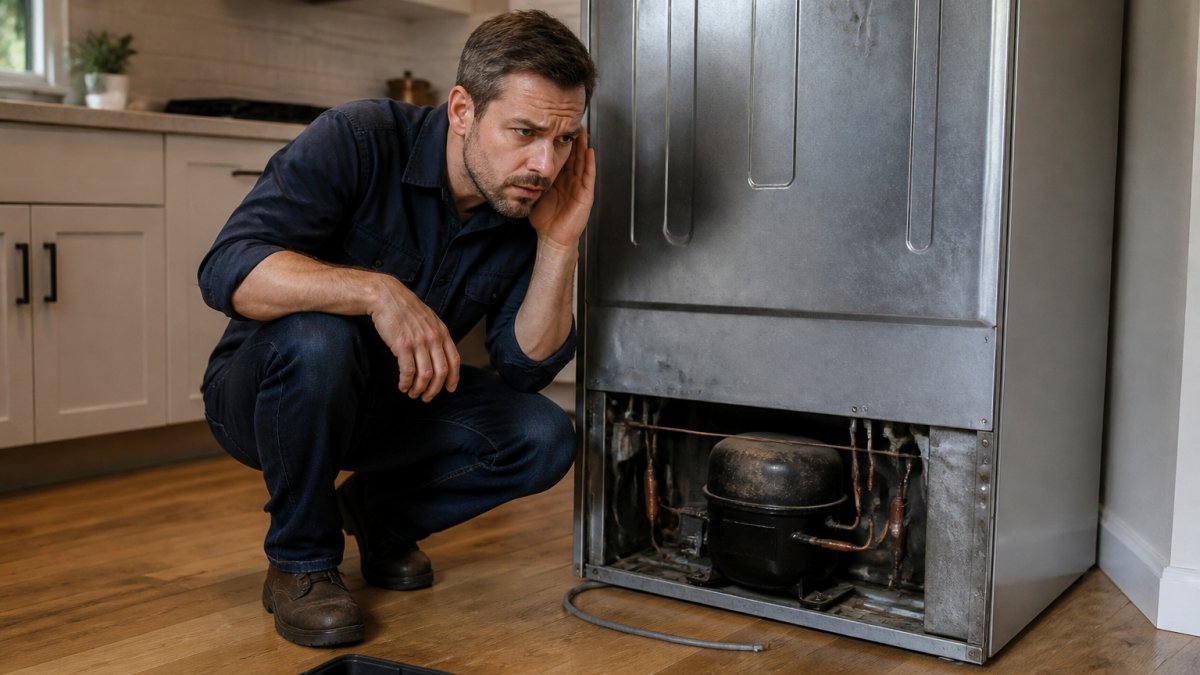
If you're asking why is my refrigerator making loud noise, the answer usually comes down to one of four parts: a fan, the compressor, loose parts, or a water line.
The good news: most loud refrigerator noises are fixable. Some you can handle yourself in a few minutes. Others need a technician.
Below, we'll walk you through a simple diagnostic process. You'll learn which sounds are harmless, which ones signal a real problem, and when to stop using the fridge entirely.
Normal Operating Sounds vs. Red-Flag Noises
Refrigerators are never silent. They run a cooling cycle, a defrost cycle, and an ice maker, and each makes noise.
Normal sounds include:
- Soft humming from the compressor
- Light whirring from fans moving air
- Occasional clicking as the thermostat kicks on
- Running water sounds during the defrost cycle
- Ice dropping into the bin
Red-flag noises are different. Watch for these:
- Loud banging or knocking that repeats
- Sharp rattling that gets worse over time
- Grinding or scraping metal sounds
- A buzzing that never stops
- Any noise paired with the fridge not cooling
What Are Normal Refrigerator Sounds?
Normal refrigerator sounds are the quiet hums, clicks, and water trickles that come from a working cooling system. The U.S. Department of Energy refrigerator guide notes that all refrigerators cycle on and off to hold temperature, and each cycle produces some sound.
Here's what you should expect to hear:
- Humming: The compressor running. Steady and low.
- Whirring: The condenser or evaporator fan pushing air.
- Clicking: The thermostat or defrost timer switching.
- Gurgling: Refrigerant moving through the coils.
- Dripping: Melted frost draining during defrost.
The key word is steady. A healthy fridge sounds about the same day to day. If the noise changes pitch, gets louder, or starts and stops in a rhythm, investigate.
Identify the Noise: Whirring, Buzzing, Rattling, and Knocking
The fastest way to find the cause is to match the sound to the part. Different noises point to different problems.
| Sound | Likely Cause | Quick Fix |
|---|---|---|
| Whirring | Fan blade hitting ice or debris | Defrost or clear the obstruction |
| Buzzing | Loose part or failing relay | Tighten or replace the part |
| Rattling | Loose panel, coil, or item on top | Tighten panels, move items |
| Knocking | Compressor or water line | Check leveling and water line |
| Grinding | Worn fan motor bearing | Replace the fan motor |
| Humming (loud) | Compressor strain or dirty coils | Clean coils, check airflow |
A common mistake is guessing at the part before listening closely. Stand near the fridge for a full cycle. Note where the sound comes from: top, back, or bottom.
Then move to the matching section below.
Refrigerator Fan Making Noise: Condenser and Evaporator Fan Problems
A refrigerator fan making noise is the most common complaint we get. There are two fans, and each causes a different sound.
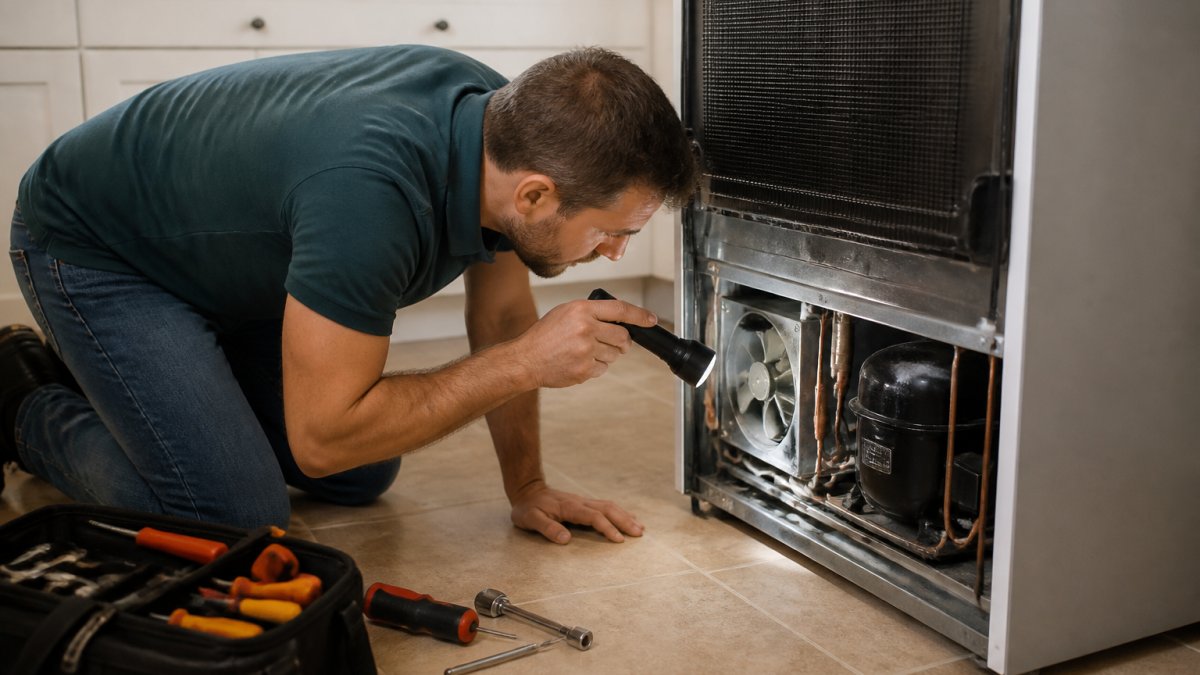
The condenser fan sits near the compressor at the back or bottom. It pushes heat away from the coils. When it's blocked or worn, you'll hear rattling or grinding from the back of the fridge.
The evaporator fan sits inside the freezer compartment. It moves cold air into the fridge. When it's iced up, you'll hear whirring or scraping from inside the freezer.
Ice Buildup Around Fans and Vents
Ice buildup is the top cause of a noisy evaporator fan. When the defrost system fails, frost builds on the fan blades, which then hit the ice as they spin.
Signs to look for:
- Whirring or scraping from the freezer
- Frost on the back wall of the freezer
- The fridge side feeling warm
- Food spoiling faster than usual
A full manual defrost can clear it: unplug the fridge, empty it, and let it sit 24 hours with the doors open. If the noise returns within a few weeks, the defrost heater or thermostat needs replacing.
Dirty Condenser Coils and Airflow Blockage
Dirty condenser coils are a silent problem that turns loud. Coils clogged with dust and pet hair can't release heat, so the compressor runs longer and harder, raising the noise level.
To check your coils:
- Unplug the refrigerator.
- Pull it away from the wall.
- Find the coils at the back or behind the toe grille.
- Vacuum them with a brush attachment.
- Leave 1-2 inches of clearance behind the fridge.
Clean coils every 6-12 months. This single step reduces noise and helps the fridge run less.
Refrigerator Compressor Making Noise: Vibration, Humming, and Knocking
A refrigerator compressor making noise is usually a sign of vibration, not failure. The compressor sits on rubber mounts that absorb movement.
Work through these checks in order, from simplest to most involved.
1. Level the fridge. A unit that rocks will vibrate and knock.
2. Check clearance and contact. Push the fridge back so it isn't touching a wall, cabinet, or countertop.
**3.
**4.
5. Rule out heat and airflow problems. A compressor that runs hot and loud is often straining against dirty condenser coils or blocked airflow.
Common compressor noises and what they mean:
- Loud, steady humming: The compressor is straining. Often from dirty coils, restricted airflow, or low refrigerant.
- Knocking or thumping: The compressor is loose, the mounts are worn, or the fridge isn't level.
- Buzzing: The start relay or run capacitor is failing.
- Clicking then silence, on repeat: The compressor is trying to start but can't, relay, capacitor, or compressor.
- Grinding or metal-on-metal: Stop. Unplug the fridge and call a technician.
Model-Specific Notes: Find Your Model Number First
Fan locations, normal sounds, and compressor behavior vary by model. Before ordering a part or assuming a noise is abnormal, find your model and serial plate, usually behind the kick plate, inside the fresh-food compartment on a side wall, or behind the crisper drawer. Check the owner's manual for the normal-sound list and fan layout; manufacturer support sites publish manuals by model number, the fastest way to confirm whether a sound is expected for your unit.
Why Your Refrigerator Noise Stops When the Door Opens
When the refrigerator noise stops when the door opens, the evaporator fan is the culprit. Most fridges have a door switch that cuts power to the fan when the door opens.
So if the noise stops the moment you open the door, you've just confirmed it's the evaporator fan. That narrows your diagnosis fast.
What to do next:
- Check for ice buildup on the fan blades
- Look for a warped or cracked fan blade
- Test whether the fan spins freely by hand (with the fridge unplugged)
- Check the fan motor for wear
Repair or Replace? Cost Guidance and When to Call a Technician
Repair usually beats replacement for fan and coil problems; replacement makes more sense when the compressor or sealed system fails on an older fridge.
Use this framework:
- Fan motor, relay, capacitor, thermostat, or defrost part: Repair. These are accessible, replaceable parts, and the repair is usually a fraction of the cost of a new refrigerator.
- Compressor or sealed system on a fridge over 10 years old: Consider replacing. Sealed-system repairs are labor-intensive and the rest of the appliance is near the end of its expected service life.
- Any repair costing more than half of a comparable new refrigerator: Consider replacing. Put the money toward a unit with a fresh warranty.
- Fridge under 8 years old with a sealed-system failure: Repair is often worth pricing out, especially if the unit was expensive or fits a built-in space.
A few realities shape the math:
- Age and part availability. Parts for older or discontinued models get scarce and expensive. If a part is on backorder or no longer manufactured, replacement becomes the practical choice.
- Repair severity. A single failed fan motor is a straightforward swap. A sealed-system failure involves refrigerant recovery, evacuation, and recharge, more labor, more risk, a higher bill.
- Energy cost. An older refrigerator running hot and loud is also running inefficiently. Replacing it can lower the electric bill, offsetting part of the purchase price over time.
- Warranty status. Check whether the unit is still under a manufacturer or extended warranty before authorizing any repair. A covered repair changes the math entirely.
We don't quote exact prices over the phone because costs vary by part and model. At Repair Appliance Pro Charlotte, we offer an affordable diagnostic fee, and you're under no obligation to proceed with the repair after we diagnose the issue.
Stop-Use Warning Signs and Safety Guidance
Some noises mean stop now, not later. Unplug the refrigerator and call a technician if you notice any of these:
- Grinding or metal-on-metal sounds
- A burning smell or visible smoke
- The back of the fridge feels hot to the touch
- The compressor clicks on and off rapidly
- Water pooling under or around the fridge
- The fridge is not cooling at all
- Sparking, arcing, or a tripped breaker tied to the fridge circuit
A refrigerator that's overheating can damage the cooling system and, in rare cases, create a fire risk. Don't wait on these signs.
Noise Changes After Moving, Installation, or Cleaning
Not every new noise is a fault. Temporary sounds after a move, a new installation, a manual defrost, or a deep clean are common and often resolve on their own.
- After moving or installation: The fridge may not be level yet, shipping bolts or tape may still be in place, or the unit may be too close to a wall. Re-level it, remove packing material, and restore clearance.
- After a manual defrost: Gurgling, dripping, and fan noise can spike for a day or two as ice melts and the system returns to normal.
- After cleaning: A dislodged panel, a bumped water line, or a fan blade nudged out of position can rattle. Check that panels are seated and the water line isn't touching the cabinet.
- After a power outage: The compressor may run long and loud to pull the temperature back down. Give it a few hours before you worry.
If a new noise persists past a few days, or comes with any stop-use warning sign, treat it as a fault and diagnose it.
Frequently Asked Questions
Is it normal for my refrigerator to be making noise?
Yes, some noise is normal. Refrigerators produce humming from the compressor, whirring from fans, and occasional clicking from the defrost cycle. These are normal refrigerator sounds that come and go during the cooling cycle. However, loud banging, persistent rattling, or grinding noises are not normal and usually point to a fan obstruction, loose component, or failing compressor that needs inspection.
Why does my refrigerator noise stop when the door opens?
When you open the door, the interior light activates and the evaporator fan often shuts off to prevent warm air from being circulated through the freezer compartment. If the noise stops when the door opens, the evaporator fan is the source. This could mean ice buildup on the fan blade, a worn fan motor bearing, or debris blocking the blade. Inspect the evaporator fan behind the rear freezer panel.
What does a refrigerator sound like when the compressor is going out?
A failing compressor often produces a loud humming or buzzing that persists longer than usual, followed by clicking as it tries and fails to start. You may also hear knocking or banging from internal components. If the compressor runs continuously without cooling the refrigerator properly, it is a strong sign of compressor failure and you should contact a technician for diagnosis.
When should I call an appliance repair technician about refrigerator noise?
Call a technician when the noise is loud enough to disrupt your home, when you notice the refrigerator running continuously, when cooling performance drops, or when you see ice buildup around fans or vents. Also call if you hear grinding, knocking, or banging. A professional diagnostic can determine whether the issue is a simple fix like dirty condenser coils or a major component like the compressor.